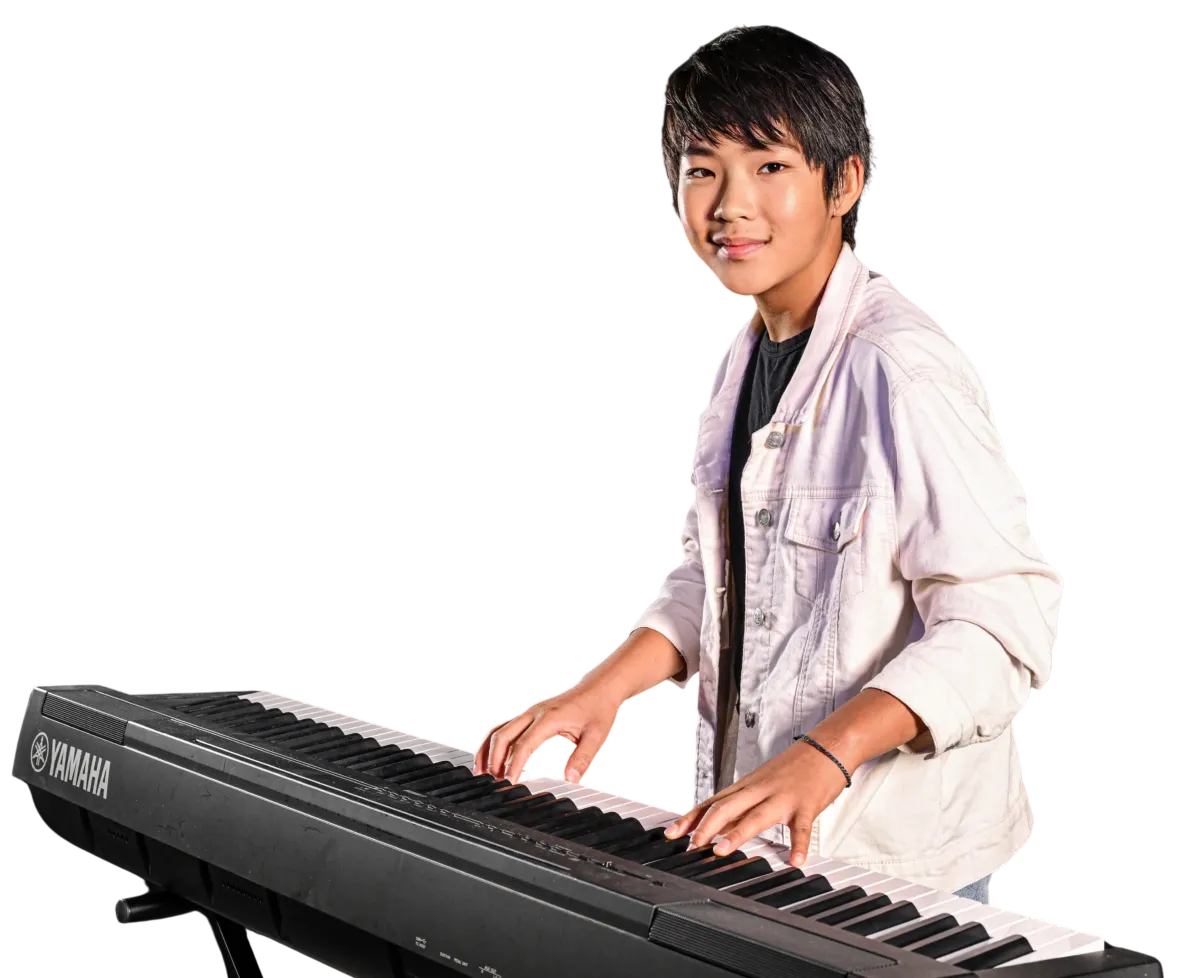
Best Age to Start Piano
What Is the Best Age to Start Piano Lessons?
One of the most common questions parents ask is, “What is the best age to start piano lessons?”
The answer may surprise you.
At Rockstars of Tomorrow - Greenwood, we don’t believe there is one perfect age to begin learning piano. Every child develops differently, and a child’s readiness is often more important than their age.
While many students begin piano lessons around age 4 or 5, we’ve seen younger students succeed and older students thrive as well. What matters most is whether a child is ready to learn and excited about making music.
Signs Your Child Is Ready for Piano Lessons
Rather than focusing solely on age, we encourage parents to look for a few key indicators of readiness.
1. They Can Focus for About 20 Minutes
A young student doesn’t need to sit perfectly still for an hour, but they should be able to engage in an activity and follow instructions for approximately 20 minutes.
Beginning piano lessons involve listening, counting, identifying patterns, and developing coordination between the hands and eyes. A child who can stay engaged for a short lesson is often ready to begin learning.
2. They Are Willing to Practice at Home
Progress happens between lessons.
Even just a few minutes of practice several times a week can make a tremendous difference. Students who are willing to spend a little time at home exploring the piano tend to build confidence and develop skills more quickly.
Parents play an important role in helping younger students establish consistent practice habits.
3. They Show Interest in Music
Perhaps the most important factor is enthusiasm.
Does your child enjoy singing along to songs? Do they pretend to play instruments? Do they get excited when they hear music? Are they asking about taking lessons?
A genuine interest in music often leads to greater engagement and long-term success.
Is Age 4 Too Young for Piano Lessons?
For many children, age 4 is a wonderful time to begin learning piano.
At this age, children are often developing the coordination, listening skills, and attention span needed to participate in lessons. They are naturally curious and enjoy learning through games, movement, and musical activities.
However, every child is different.
Some four-year-olds are more than ready to begin, while others may benefit from waiting a little longer. That’s why we focus on readiness rather than an arbitrary age requirement.
It’s Never Too Late to Start
Parents are often concerned about starting too early, but many people worry about starting too late.
The truth is that students can begin piano lessons at nearly any age. Whether a child is 6, 10, 14, or even an adult, they can develop musical skills and enjoy the benefits of learning an instrument.
Music is not reserved for those who start at a certain age. It is a skill that can be developed whenever a student is ready and willing to learn.
The Benefits of Starting Piano Lessons
Learning piano provides much more than musical knowledge.
Students often develop:
Improved focus and concentration
Better listening skills
Stronger hand-eye coordination
Increased confidence
Goal-setting and perseverance
Creativity and self-expression
Most importantly, music gives students an opportunity to experience the joy of creating something meaningful.
Finding the Right Time to Start
If your child can focus for about 20 minutes, is willing to practice at home, and has a genuine interest in music, they may be ready to start piano lessons regardless of their exact age.
At Rockstars of Tomorrow - Greenwood, we believe musical ability can be developed when a student is ready. While many of our youngest piano students begin around age 4, we recognize that every child follows their own path.
The best age to start piano lessons isn’t determined by a number. It’s determined by readiness, curiosity, and a desire to learn.
If you’re wondering whether your child is ready for piano lessons, we’d love to help. Schedule a free trial lesson on our Piano Lessons Page and let our instructors meet your child, answer your questions, and help determine the best next step on their musical journey.


