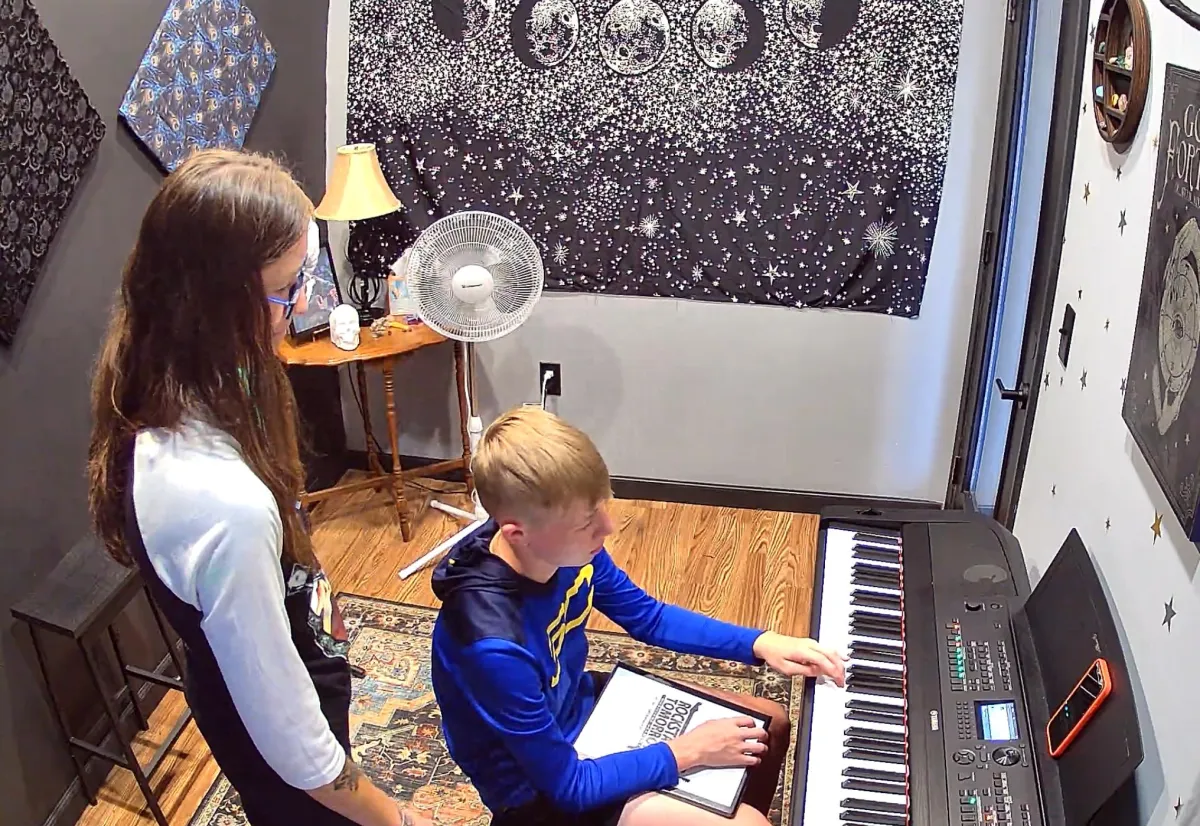
How Much Should Kids Practice Music? A Parent's Guide
One of the most common questions parents ask when their child starts music lessons is:
“How much should my child practice?”
The answer may be less complicated than you think.
For most young musicians, the goal isn't to practice for hours every day. It's to develop a consistent routine that keeps them progressing without making music feel like a chore.
At Rockstars of Tomorrow Greenwood, we believe focused, consistent practice is more valuable than simply counting minutes.
Here's how parents can help their children build healthy practice habits.
How Long Should Kids Practice?
There isn't one perfect practice time for every student. Age, experience, attention span, goals, and the difficulty of the music all make a difference.
For many students, these are reasonable starting points:
Young beginners: 10–15 minutes at a time
Elementary-age students: 15–20 minutes
Older beginners: 20–30 minutes
Intermediate students: 30–45 minutes
Advanced or performance-focused students: 45–60+ minutes
These aren't strict rules.
A focused 15-minute practice session can accomplish much more than 45 minutes spent distracted or frustrated.
Your child's instructor can also recommend an appropriate practice routine based on their individual goals.
Consistency Matters More Than Long Practice Sessions
Imagine practicing for two hours on Sunday and then not touching the instrument again until the following Sunday.
Compare that with practicing for 15 or 20 minutes several times throughout the week.
For most beginners, the second approach is much more effective.
Regular practice gives students repeated opportunities to reinforce what they're learning during their weekly music lessons.
The goal is to make music part of their normal routine.
Practice Doesn't Have to Mean Playing the Same Thing Over and Over
One reason children sometimes resist practicing is because it becomes repetitive.
A good practice session can include several activities:
Warm-ups
Scales or technique exercises
Working on a difficult section of a song
Playing through a favorite song
Practicing something assigned by the instructor
Improvising or creating something new
Simply playing for fun
Practice should include focused work, but there should also be room for students to enjoy their instrument.
After all, enjoying music is one of the biggest reasons to learn in the first place.
Break Difficult Songs Into Smaller Pieces
When a student is struggling with a song, playing it from beginning to end repeatedly isn't always the best solution.
Instead, focus on the difficult section.
Maybe it's one chord change.
Maybe it's four measures.
Maybe it's a drum fill or a difficult vocal phrase.
Slow it down, work on that small section, and then gradually put everything back together.
Learning how to break a difficult problem into manageable pieces is one of the most valuable skills students can develop through music.
Create a Regular Practice Routine
Practice becomes easier when it's connected to an existing routine.
For example:
Homework → Dinner → 15 minutes of music
or
Get home from school → Snack → Practice → Free time
The exact schedule isn't important.
Consistency is.
Having a predictable practice time also reduces the daily question of, “Did you practice yet?”
Make the Instrument Easy to Access
This sounds simple, but it can make a big difference.
If the guitar is packed away in a case at the back of a closet, a student is less likely to spontaneously pick it up.
When practical, keep the instrument somewhere safe but accessible.
A guitar on a stand, keyboard ready to play, or practice pad nearby can turn five free minutes into an unexpected practice session.
Don't Turn Practice Into a Punishment
Parents naturally want their children to make progress, especially when they're investing in music lessons.
But constant pressure can quickly turn something a child enjoys into something they want to avoid.
Encourage effort instead of demanding perfection.
Instead of:
“You haven't practiced enough.”
Try:
“Show me what you've been working on.”
Take an interest in what they're learning. Ask them to play their favorite song. Celebrate when they finally master something they've been struggling with.
Encouragement can be a powerful motivator.
Give Kids Something to Work Toward
Practice becomes much more meaningful when there's a goal attached to it.
That goal could be:
Learning a favorite song
Performing for family
Playing in a student showcase
Auditioning for a school musical
Joining a band
Recording a song
Learning a challenging solo
At Rockstars of Tomorrow Greenwood, performance opportunities give students a reason to take what they're learning in lessons and put it into action.
When students know they're preparing for something real, practice has a purpose.
What If My Child Doesn't Want to Practice?
Almost every parent encounters this eventually.
It doesn't necessarily mean your child dislikes music.
Sometimes the material is too difficult. Sometimes they're tired. Sometimes they don't know what they're supposed to practice. And sometimes they'd simply rather do something else that day.
If practice becomes a constant struggle, talk with your child's instructor.
A small adjustment to the music, goals, practice routine, or lesson approach can sometimes make a big difference.
Progress, Not Perfection
The goal of music practice isn't perfection.
It's progress.
Ten focused minutes today, another fifteen tomorrow, and twenty minutes later in the week all add up.
Over time, students begin to hear the difference themselves. Songs become easier. Chords become more natural. Rhythms become more comfortable. Confidence grows.
And eventually, practice isn't something they're doing simply because a parent or instructor told them to.
They're practicing because they want to get better.
Help Your Child Get Started with Music
If your child is interested in guitar, piano, drums, voice, bass, violin, and another instrument the first step isn't creating the perfect practice schedule.
It's finding an instrument and instructor that makes them excited about learning.
At Rockstars of Tomorrow Greenwood, we offer personalized music lessons designed around each student's interests, experience, and goals.


